
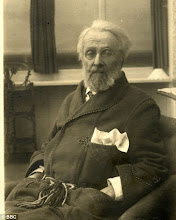
Hot on the heels of the IMF’s “endorsement” of George Osborne’s plans for the economy comes the disastrous May figures for retail sales, and Ed Balls making a speech suggesting that VAT be cut back to 17.5% to jump start sales on the high street.
Clearly, our economic waters are confusing and choppy at the moment.
Buried deep down in the original text of the IMF document (point # 9, in fact) we find:
Risks and uncertainty around this central scenario are significant. Large risks to growth and inflation arise from uncertainties surrounding euro-area sovereign turmoil, the housing market, the size of the output gap, and commodity prices. Indeed, unexpected spikes in commodity prices were a significant factor behind revisions to our 2011 inflation and growth forecasts since the 2010 Article IV consultation. Another risk is uncertainty surrounding the size of fiscal multipliers and the degree to which private demand and net exports will be vibrant enough to pick up the slack from fiscal consolidation. Uncertainties arising from key risks are further compounded by the unusually large disconnect between recent weak GDP outturns and other indicators that are stronger (e.g., rising employment, higher-than-forecast tax revenue, and stronger private sector surveys), making it all the more difficult to ascertain the economy’s near-term direction
Translation? We haven't got a fucking scooby.
My interest had been piqued by this, so I rang up the IMF Press Office. I know, I will be for it when the phone bill comes in, living off bread and scrape, sleeping in the dog kennel and no sex for a month (no change there, then) but it was worth every penny.
I wish I had recorded it.
IMF WOMAN: Media relations, how many I help you?
ME: Hi, I am a freelance writer in the UK and I was thinking of writing something about John Lipsky, following his pronouncement on the UK economy. Am I right in thinking he's now the acting managing director?
IMF WOMAN: That's right
ME: And is he getting the same salary as Mr Strauss-Kahn, I mean, given that he's going the same job?
IMF WOMAN: I don't know. Would it be possible for you to put your question in an email to ...
ME: Well, it's a simple enough question, someone must know the answer. Is there a section on the IMF web site where you publish peoples' salary scales?
IMF WOMAN: No.
ME: Is that because it's a secret?
IMF WOMAN: I don't know. If you could just send an email to...
ME: So you are saying that you either don't know or you won't tell me what the managing director of the IMF earns?
IMF WOMAN: Yes
ME: Well, I think that tells me all I need to know about your grasp of economics. Goodbye.
My reason for asking is that I suspect, from Mr Lipsky's bio on the IMF web site, that he is not short of a bob or two. Given his current directorships and his previous posts with various fund managers (hang on, weren't they the ones that caused all this...?) I reckon he's probably got the odd "portrait of Madison" in his safe. And good luck to him.
I also suspect, although, unlike Mervyn King, he hasn't been stupid enough to say that he's probably also of the opinion that unemployment in the North of England is a price worth paying etc etc chiz chiz, whatever the quotation was. If it looks like a duck, walks like a duck, and quacks like a duck, it's ... probably ... a duck.
I managed to find out, by a bit more research, what Mr Strauss-Kahn was on in 2007 when appointed. A tax free salary of $420,930 pa [source: Bloomberg Economic Weekly] plus benefits.
So, let us assume that Mr Lipsky is on the same, although if he's still working on a 2007 salary scale, I will masticate my headgear.
$420,903 pa is $8094.81 per week, which, at today's exchange rate, is £4913.55 per week. Tax free.
The current rate of Employment Support Allowance in the UK at the lowest level is £65.45 per week.
Obviously Mr Lipsky is very well-qualified to rubber-stamp Osborne’s assault on the poor and the disadvantaged.
True, there has been one glimmer of hope for the benighted fools in Westminster in the news that unemployment is apparently down. The private sector created 88,000 jobs in three months, apparently. Of course, many of these “jobs” will be part time and poorly paid, with little or nothing in the way of security or workers’ rights. And I still adhere to my previous statement that we haven’t seen the worst of it yet, simply because the effect of the Tory cuts dumping people onto the unemployment register hasn’t percolated through to the bottom line yet.
Into all this maelstrom of uncertainty blunders Ed Balls, attacking the government and insisting that the VAT increase be reversed as a matter of urgency. On the face of it, it should be good news that at least the Labour Party has rediscovered its balls (literally and metaphorically) and is making some sort of effort to attack the Tories.
However, as Ann Pettifor points out on the blog “Left Foot Forward”, by accepting that the underlying premise for the debate is simply “cuts” to “pay down the deficit”, and the only point at issue is how quickly and how deeply these should take place, Balls has in fact surrendered much of the battlefield to Cameron from the start. The whole article is worth reading, but these are the salient points:
Balls began his speech by mentioning Labour’s “emphasis on jobs and growth”, but the speech immediately morphed into Labour’s concession to the coalition, that what is needed is “a steady and balanced approach to halve the deficit in four years”. The implication being that cuts must be matched by ‘jobs and growth’. But the highlight of the speech – the soundbite that his spin doctors no doubt intended the media to emphasise – is a call for a cut in VAT “to boost consumer confidence and jump-start the economy”; Cameron flashed back his retort: “slashing taxes”, he argued, would only make the UK’s fiscal deficit worse. And so Balls is trapped: the debate now centres on whether the deficit can be financed by increasing or cutting taxes, in particular VAT. For most people, Cameron has the upper hand.
‘Of course the deficit can only be financed by increased taxes’ is the consensus. Because we have ‘spent beyond our means’, we have to raise taxes, like VAT. “Slashing” VAT – when it is higher VAT returns that are paying down the deficit – is unacceptable to the coalition, to the Treasury, to orthodox economists and to the bulk of the British public. But that’s only because most have been drilled in the propaganda: “the deficit is like a credit card”. We need to pay it down. To do so, we have to mobilise/hoard ‘savings’, i.e. higher taxes, to pay down the ‘credit card’ – but the government’s deficit is not like a credit card. And nor do we need ‘savings’ to pay it down.
The only surefire way of paying down the deficit is not by government cutting the deficit (which I and others have argued it cannot do), but by employment. Put 2.43 million people back to work, and – hey presto! – the deficit will vanish. Get 2.43 million people, including thousands of skilled and unskilled workers, clever and talented student graduates, to address Britain’s very real insecurities in energy, food and health and – hey presto – the deficit will be financed.
How? By the tax revenues that will pour into the Treasury’s coffers, either directly or indirectly – and by the savings that will be made on welfare benefits.
However, keep 2.43 million people unemployed, keep them feeling insecure, with their purses firmly shut, and you can guarantee an ever-rising government deficit (April’s deficit numbers were the highest on record for that month). And 2.43 million unemployed is sure to make British ‘confidence’ fall and the recession deepen.
I couldn’t have put it better myself.
Showing posts with label Credit Crunch. Show all posts
Showing posts with label Credit Crunch. Show all posts
Saturday, 18 June 2011

Tuesday, 29 March 2011
Hick-ery, Dick-ery, Bloc.
On Saturday, 26 March, half a million people marched through London to show their opposition to the savage, ideological cuts being imposed by the Tories, held up by Clegg and his band of merry men, (whose idea of a Robin Hood tax seems also to be to rob from the poor and give to the rich, while in the background, Caroline Spelman puts Sherwood Forest on e-bay).
People from all walks of life were there, people I know, either personally, or online,of all ages, across the whole community, people whose sole aim was that they wanted to demonstrate, peacefully and in a dignified manner, that these cuts in services and funding, affecting the poorest and those least able to manage, were "not in their name".
Unfortunately, none of that got on the news. The news media are often lazy, sometimes stupid, they have a "slot" to fill, and the VT gets edited to fit the time available. All of this is common knowledge.
And so, predictably, on the news on Saturday and all over the print media at the weekend, the story was dominated not by the vast, peaceful, dignified majority, but by two linked, but essentially separate activities - the occupation of Fortnum and Mason's by UK Uncut, and the actions of the so-called "anarchists", all 400 or so of them out of a crowd of half a million, who make up the organisation "Black Bloc".
It was very naive of UK Uncut, to have scheduled an action to take place in the context of this march. In the past, I have admired and applauded their cheeky, non-violent inventiveness in highlighting the part which big companies avoiding tax and shirking their responsibilities plays in the large black hole in Britain's balance sheet. But by doing what they did on a day when anyone with half an amoeba inside their skull must have known that it would be kicking off, they have scored a spectacular own goal, compounded by the feeble performance of their spokesperson on Newsnight on 28 March in failing to condemn the violence. Idiots. It plays right into the hands of the establishment, who now have the brush of anarchy and violence with which to tar UK Uncut. They have set their campaign back years. If they had only had the sense to occupy Fortnums the day after the demo, they would still have hung on the coat tails of the publicity, but the story would then have been the contrast between their peaceful demo and the violence of the previous day.
The "anarchists" of course, are, like the poor, always with us. They tag along at every demo, sticking it to the man by breaking the windows of a bus shelter. Freedom for Tooting, what did the Romans ever do for us? They are beyond satire, and, being bone from the neck up, impervious to it. But they are not that dumb, they have spotted how successful UK Uncut has been at organising and recruiting, and they have now "written" an open letter to them, offering their "support". Well, if you wanted a perfect example of an attempted reverse takeover by a wolf in sheep's clothing, there you have it. I hope UK Uncut have the sense to tell them to sod off.
I could rant for hours about what idiots these people are, but I will leave that for another day. Instead, here's an extract from a post on one of their forums from a trade unionist who was actually on the march, and took the time to register in order to tell them exactly what he thought.
It was a demo. It was supposed to set an agenda and make the public aware that we're not going to accept the cuts. It wasn't a revolutionary moment.
Those red'n'black lot (why do they all dress the same, its weird, like some cult) 'joined' the march at various points (Piccadilly mainly) and made gigantic pricks of themselves by such predictable and irrelevant acts of violence that were utterly meaningless in the bigger picture. Throwing paint and smoke bombs at the Ritz does absolutely zero to further any revolutionary aim.
What it did do however was enable the media to focus on the violence and avoid the issues in question. And, yes, they would have covered it well without the violence. The media have been all over the unions and TUC who organised the march for weeks in advance of this. But now they're ignoring us in the trade union movement and giving all the attention to the perpetrators of violence.
What the actions of the various show offs, self-obssessed and selfish bellends that decided to play revolution for the day managed to achieve was to directly support the objectives of the media. And to detract from the social movement against this government.
Oh and they also managed to scare the shit out of some familes and kids that got caught in the crush outside Fortnums in the process.
Well done. I hope they are very proud of themselves
Says it all, really.
People from all walks of life were there, people I know, either personally, or online,of all ages, across the whole community, people whose sole aim was that they wanted to demonstrate, peacefully and in a dignified manner, that these cuts in services and funding, affecting the poorest and those least able to manage, were "not in their name".
Unfortunately, none of that got on the news. The news media are often lazy, sometimes stupid, they have a "slot" to fill, and the VT gets edited to fit the time available. All of this is common knowledge.
And so, predictably, on the news on Saturday and all over the print media at the weekend, the story was dominated not by the vast, peaceful, dignified majority, but by two linked, but essentially separate activities - the occupation of Fortnum and Mason's by UK Uncut, and the actions of the so-called "anarchists", all 400 or so of them out of a crowd of half a million, who make up the organisation "Black Bloc".
It was very naive of UK Uncut, to have scheduled an action to take place in the context of this march. In the past, I have admired and applauded their cheeky, non-violent inventiveness in highlighting the part which big companies avoiding tax and shirking their responsibilities plays in the large black hole in Britain's balance sheet. But by doing what they did on a day when anyone with half an amoeba inside their skull must have known that it would be kicking off, they have scored a spectacular own goal, compounded by the feeble performance of their spokesperson on Newsnight on 28 March in failing to condemn the violence. Idiots. It plays right into the hands of the establishment, who now have the brush of anarchy and violence with which to tar UK Uncut. They have set their campaign back years. If they had only had the sense to occupy Fortnums the day after the demo, they would still have hung on the coat tails of the publicity, but the story would then have been the contrast between their peaceful demo and the violence of the previous day.
The "anarchists" of course, are, like the poor, always with us. They tag along at every demo, sticking it to the man by breaking the windows of a bus shelter. Freedom for Tooting, what did the Romans ever do for us? They are beyond satire, and, being bone from the neck up, impervious to it. But they are not that dumb, they have spotted how successful UK Uncut has been at organising and recruiting, and they have now "written" an open letter to them, offering their "support". Well, if you wanted a perfect example of an attempted reverse takeover by a wolf in sheep's clothing, there you have it. I hope UK Uncut have the sense to tell them to sod off.
I could rant for hours about what idiots these people are, but I will leave that for another day. Instead, here's an extract from a post on one of their forums from a trade unionist who was actually on the march, and took the time to register in order to tell them exactly what he thought.
It was a demo. It was supposed to set an agenda and make the public aware that we're not going to accept the cuts. It wasn't a revolutionary moment.
Those red'n'black lot (why do they all dress the same, its weird, like some cult) 'joined' the march at various points (Piccadilly mainly) and made gigantic pricks of themselves by such predictable and irrelevant acts of violence that were utterly meaningless in the bigger picture. Throwing paint and smoke bombs at the Ritz does absolutely zero to further any revolutionary aim.
What it did do however was enable the media to focus on the violence and avoid the issues in question. And, yes, they would have covered it well without the violence. The media have been all over the unions and TUC who organised the march for weeks in advance of this. But now they're ignoring us in the trade union movement and giving all the attention to the perpetrators of violence.
What the actions of the various show offs, self-obssessed and selfish bellends that decided to play revolution for the day managed to achieve was to directly support the objectives of the media. And to detract from the social movement against this government.
Oh and they also managed to scare the shit out of some familes and kids that got caught in the crush outside Fortnums in the process.
Well done. I hope they are very proud of themselves
Says it all, really.
Emergency, War 10!
The Tories and their stooges in the Mini-Tories have been quick to point out that the cost of the war against Libya will not come out of any existing budgets from Government departments already squeezed by the cuts, cut - in some cases - to the bone, and then beyond.
No, it will, instead, apparently, come out of a "contingency fund" in the Treasury, which is kept for emergencies and dire situations, according to Danny Alexander, on BBC's Question Time.
Now just hang on a cotton-pickin minute, thar, boy! Run that by me one more time, as Captain said to Tenniel or vice versa. The country is allegedly stony broke, on its uppers, so much so that the church mice are having a whip-round for us and yet, all the time, we're all in this together (though clearly some of us are "in it" up to our necks and sinking fast, while others haven't even had their expensive shoes splashed, yet) and all this time, the Treasury has a secret slush fund, a giant piggy bank in the underground car park, a hidden panel that, when pressed reveals a cupboard stuffed with £50 notes or something? What?!?!
Not only a secret slush fund, but one which must be fairly substantial, since it can stand funding the UK bombing the crap out of Benghazi with missiles that cost £800,000 each!
This, for me, raises a very important question. If this money is supposed to be used for emergencies, when is an "emergency" not an "emergency"? If we have got to the stage where we're shutting hospital wards, Sure Start centres and libraries, that is a bloody emergency! If we have got to the stage where we're cutting police because we can no longer afford to keep our streets safe, that is an emegency! If we've got to the stage where thousands of people are being laid off - in the construction industry for example - that is an emergency. If we've got people having their houses repossessed and being turned out onto the streets, that is an emergency.
Forget foreign adventurism and posturing on the world stage. We have little or no idea who these Libyan rebels are, or, in the long run, whether the situation there would be better or worse for our intervention. The examples of Iraq and Afghanistan don't hold out much hope.
Meanwhile, you don't need a flashing blue light and a howling siren to see that there are many more urgent "emergencies" at home, caused by the Con-Dims "bombing" their own economy, to appease the markets and bankers, that deserve much more to benefit from the judicious application of Danny Alexander's secret slush fund.
No, it will, instead, apparently, come out of a "contingency fund" in the Treasury, which is kept for emergencies and dire situations, according to Danny Alexander, on BBC's Question Time.
Now just hang on a cotton-pickin minute, thar, boy! Run that by me one more time, as Captain said to Tenniel or vice versa. The country is allegedly stony broke, on its uppers, so much so that the church mice are having a whip-round for us and yet, all the time, we're all in this together (though clearly some of us are "in it" up to our necks and sinking fast, while others haven't even had their expensive shoes splashed, yet) and all this time, the Treasury has a secret slush fund, a giant piggy bank in the underground car park, a hidden panel that, when pressed reveals a cupboard stuffed with £50 notes or something? What?!?!
Not only a secret slush fund, but one which must be fairly substantial, since it can stand funding the UK bombing the crap out of Benghazi with missiles that cost £800,000 each!
This, for me, raises a very important question. If this money is supposed to be used for emergencies, when is an "emergency" not an "emergency"? If we have got to the stage where we're shutting hospital wards, Sure Start centres and libraries, that is a bloody emergency! If we have got to the stage where we're cutting police because we can no longer afford to keep our streets safe, that is an emegency! If we've got to the stage where thousands of people are being laid off - in the construction industry for example - that is an emergency. If we've got people having their houses repossessed and being turned out onto the streets, that is an emergency.
Forget foreign adventurism and posturing on the world stage. We have little or no idea who these Libyan rebels are, or, in the long run, whether the situation there would be better or worse for our intervention. The examples of Iraq and Afghanistan don't hold out much hope.
Meanwhile, you don't need a flashing blue light and a howling siren to see that there are many more urgent "emergencies" at home, caused by the Con-Dims "bombing" their own economy, to appease the markets and bankers, that deserve much more to benefit from the judicious application of Danny Alexander's secret slush fund.
Sunday, 13 March 2011
A Rose By Any Other Name
I thought I heard a report during the week that Sir Fred Goodwin had taken out an injunction to stop people referring to him as a "banker".
OK, fair enough. I can appreciate it's a nasty word, and nobody would like to be referred to in those terms.
We need to find something more appropriate for these people, something more politically correct.
How about "septic wart on the bloated arse of capitalism"?
Yep, that does it for me.
OK, fair enough. I can appreciate it's a nasty word, and nobody would like to be referred to in those terms.
We need to find something more appropriate for these people, something more politically correct.
How about "septic wart on the bloated arse of capitalism"?
Yep, that does it for me.
Friday, 4 February 2011
Double Dip
Eight months in to the ConDim administration, and we’re starting to see the first damaging effects of the draconian cuts as the economy plunges back into recession, albeit only by 0.5%, but I wonder what the next quarter’s figures will be. They can’t very well blame the snow next time, and if they say it’s due to the increase in VAT, then they are on a dodgy wicket, since that was their idea as well (despite having “no plans” to do it, when asked back in May).
Every time I hear the phrase “double dip” I have this mental picture of George Osborne and Vince Cable, but I guess that’s just me, eh.
So we see, today, Clegg being pressed into service (the Tories always send out an expendable, gullible Lib Dim when they have something evil or contentious or untrue to announce) to give a speech in Rotherham (oh, the irony!) about how the government does really have a plan for growth, honest, it’s just that before we can implement it, we have to slash and burn and decimate and stifle the economy, then when it’s well and truly buggered beyond all recognition, and reduced to broken glass and ashes, well, that’s the time to start thinking about recovery, obviously!
Deficit reduction by cuts is apparently a vital element of the growth plan, according to Clegg, which is a bit like saying that dousing your allotment with paraquat is a vital element in ensuring a bumper crop next year! Either the man is a complete tit or he’s totally dishonest. I suppose there’s an outside chance that he might just be both.
Meanwhile, the four horsemen of the apocalypse, Osborne, Cable, Shapps and Pickles, continue scything their way through the public sector infrastructure. 500 jobs here, 1000 there, this year, next year.
I have just one question to the people who support the coalition in its berserker attack on our society and way of life – it’s quite a simple question, and it is this:
Are you happy with the idea of unemployment, repossessions, marriage breakups? Are you happy with the idea of companies being driven to the wall? Are you happy with the idea of the public services being stripped back and cut to the bone? Do you chortle with glee at the thought of people on benefits having their money cut? Are you happy that companies are no longer able to afford to pay their employees? Are you happy, these cold winter nights, about people sleeping in doorways and under bridges? Does it fill your heart with pride and make you glad to be British?
Or like me, does it make you long for a time when it was like Ancient Rome, as portrayed in Macaulay’s Horatius:
Then none was for a party;
Then all were for the state;
Then the great man helped the poor,
And the poor man loved the great:
Then lands were fairly portioned;
Then spoils were fairly sold:
The Romans were like brothers
In the brave days of old.
Now Roman is to Roman
More hateful than a foe,
And the Tribunes beard the high,
And the Fathers grind the low.
As we wax hot in faction,
In battle we wax cold:
Wherefore men fight not as they fought
In the brave days of old.
What I want is someone to take us back to the brave days of old. “Brave” being the operative word, since they would be flying in the face of the yellow press and the vested interests of the current swarm of venal vermin who have somehow, unaccountably, (in both senses of the word) misappropriated the levers of power.
So, my Literal Dimwit chums – are you happy with what you are doing to our country by your support of Cameron and his Tory toffs? And if you are not happy, then why not vote with your feet, get out and leave them to it.
Oh - and, do you know, despite all this, despite the fact that their constituents are up against it and struggling left, right and centre, MPs are STILL whingeing about expenses. Still! They just don’t bloody get it. So you can’t claim for everything, so your paperwork gets lost by officialdom, so, it costs you money to do your job. Welcome to the real world, the one the rest of us live in, and shut the fuck up.
Every time I hear the phrase “double dip” I have this mental picture of George Osborne and Vince Cable, but I guess that’s just me, eh.
So we see, today, Clegg being pressed into service (the Tories always send out an expendable, gullible Lib Dim when they have something evil or contentious or untrue to announce) to give a speech in Rotherham (oh, the irony!) about how the government does really have a plan for growth, honest, it’s just that before we can implement it, we have to slash and burn and decimate and stifle the economy, then when it’s well and truly buggered beyond all recognition, and reduced to broken glass and ashes, well, that’s the time to start thinking about recovery, obviously!
Deficit reduction by cuts is apparently a vital element of the growth plan, according to Clegg, which is a bit like saying that dousing your allotment with paraquat is a vital element in ensuring a bumper crop next year! Either the man is a complete tit or he’s totally dishonest. I suppose there’s an outside chance that he might just be both.
Meanwhile, the four horsemen of the apocalypse, Osborne, Cable, Shapps and Pickles, continue scything their way through the public sector infrastructure. 500 jobs here, 1000 there, this year, next year.
I have just one question to the people who support the coalition in its berserker attack on our society and way of life – it’s quite a simple question, and it is this:
Are you happy with the idea of unemployment, repossessions, marriage breakups? Are you happy with the idea of companies being driven to the wall? Are you happy with the idea of the public services being stripped back and cut to the bone? Do you chortle with glee at the thought of people on benefits having their money cut? Are you happy that companies are no longer able to afford to pay their employees? Are you happy, these cold winter nights, about people sleeping in doorways and under bridges? Does it fill your heart with pride and make you glad to be British?
Or like me, does it make you long for a time when it was like Ancient Rome, as portrayed in Macaulay’s Horatius:
Then none was for a party;
Then all were for the state;
Then the great man helped the poor,
And the poor man loved the great:
Then lands were fairly portioned;
Then spoils were fairly sold:
The Romans were like brothers
In the brave days of old.
Now Roman is to Roman
More hateful than a foe,
And the Tribunes beard the high,
And the Fathers grind the low.
As we wax hot in faction,
In battle we wax cold:
Wherefore men fight not as they fought
In the brave days of old.
What I want is someone to take us back to the brave days of old. “Brave” being the operative word, since they would be flying in the face of the yellow press and the vested interests of the current swarm of venal vermin who have somehow, unaccountably, (in both senses of the word) misappropriated the levers of power.
So, my Literal Dimwit chums – are you happy with what you are doing to our country by your support of Cameron and his Tory toffs? And if you are not happy, then why not vote with your feet, get out and leave them to it.
Oh - and, do you know, despite all this, despite the fact that their constituents are up against it and struggling left, right and centre, MPs are STILL whingeing about expenses. Still! They just don’t bloody get it. So you can’t claim for everything, so your paperwork gets lost by officialdom, so, it costs you money to do your job. Welcome to the real world, the one the rest of us live in, and shut the fuck up.
Monday, 22 November 2010
Accentuate the Positive (part 1)
This is the first of two positive posts I will attempt. People have said that my blog is invariably negative and that I don’t have a good word for the Tories or the Literal Dimwits. This is untrue, I have several good words for them, most of which begin with f or c.
It has also been suggested to me that if there was another general election, it would simply result in the re-election of a further Tory government. I wonder, though, are we absolutely sure about this? Because I think if Cameron and Clegg did the honest thing, merged their two parties formally, acknowledging that the LibDims have been swallowed whole by the Orca of the conservative party, instead of riding it like Dolphin Boy or whatever he was called, as they naively hoped, and went to the country on their actual policy, as now revealed, which was not part of their platform last May, they would get decimated. And deservedly so.
I agree with their critics about the Labour party, though. When they were in power they did not do enough to keep the bankers, speculators and rentier capitalists in check, though to Brown’s credit, and this is something you won’t hear me say very often, to Brown’s credit, he was exactly the right person to have in place during the banking crisis of 2008, and he may also have displayed prescience and foresight in keeping us out of the damned Euro.
But yes, I agree, the present Labour party doesn’t have a clue what to do, as it showed recently by electing the wrong leader, a man with the killer instinct of Tim Henman. I did have high hopes that the Labour party would bounce back off the ropes, with Biffo at the helm, and start tearing into the Tory tissues of lies, contradictions and doublespeak.
God alone knows, there is plenty to go at, but it seems that Mr Ed the talking horse was too busy doing to his wife what he is now about to do to the party of the amalgamated wheeltappers and shunters. Very sad. It means that the poor and underprivileged, the ill, and those on benefits will be thrown to the Tory wolves unless someone else comes forward to stop it, and since democracy has failed in this respect, because none of the parties at the last election were willing to engage in the democratic process, then the next step may have to be one of those outbursts of extraparliamentary action which have marked the major advances in British social history from Corn Law Reform to the Peterloo Massacre to the Jarrow Crusade and the march against the Iraq war.
If Labour did win, so the theory goes, then the markets are going to take fright and cause even more unemployment and misery. Ah, well, here I do differ. “There is no alternative” is a mantra which we will hear from the Tories and their stooges again and again, but actually there are quite a lot of alternatives, starting from the doctrinaire Marxist approach of nationalising ALL the banks and financial institutions, down from there to more sensible proposals based on a mixed economy.
It comes down to who you think should run the country, ultimately, the markets or a democratically elected government. Paul Krugman, writing in his NY Times Blog (“The Beatings Will Continue Until Morale Improves”) points out that Argentina told the IMF where to get off, and then was able to negotiate a much better package, with fewer drastic implications for cuts, which they subsequently paid off. So it seems that even WITH Government from the IMF, which is often represented as the consequence of Labour’s “shallower cuts, less quickly” approach, you don’t have to take the first deal you’re given.
It is true that people are still using the banks as a convenient “whipping boy” in non-credible alternatives. It is first worth establishing some things on which we could probably agree.
The massive sovereign debts of the advanced capitalist countries are the result of governments converting private debt into public debt, having bailed out the banks and rescued the system. Worldwide, the cost of this unprecedented bail-out is estimated to be US$10.8 trillion (£7 trillion). Some estimates have been as high as US$14 trillion. So it is not merely a case of Gordon Brown alone being on a one-man mission to wreck the economy, in fact it may turn out in time that it was him who saved us from having to queue in the streets for loaves of bread thrown off the back of an army lorry, however useless he may have been as a politician in many ways (too stubborn, badly advised, and not media savvy) and ill-fitted to be Prime Minister.
In Britain, an eye-watering £1.5 trillion was thrown at the banks, equating to 94.4% of the Gross Domestic Product. Much of this money was for guarantees against banking losses, which have since been recovered. Into the bargain, the government was forced to nationalise Northern Rock and the Royal Bank of Scotland. However, the total cost to the taxpayer is estimated to be £815bn, or £31,000 per household.
Although these banks were formally nationalised, in reality, the bail-out meant the nationalisation of the debts and the privatisation of the profits; in Britain, ordinary people are being attacked in order to reduce a budget deficit of £149bn, while nobody can deny that bankers continue to receive millions in public subsidies and bonuses.
As I said before, if I were a Marxist (biddy biddy biddy biddy biddy biddy biddy boom) I would be calling for the nationalisation of the entire sector. I am not, but I don’t see why they shouldn’t share more of the burden than is presently the case, since they caused the problem in the first place, and it is unfair and unjust to expect poor people to pay for the mistakes of the rich – see below.
Classic Marxist theory holds that sooner or later, the market becomes too narrow for the continuous outpouring of commodities; everybody already has two mobile phones and a new sofa from DFS. The capitalist system faces a crisis of over-production. If you look at what happened in 2008, it is quite a compelling analysis.
The capitalists attempted to delay this crisis, the Marxists say, by creating the greatest credit bubble in history. At bottom, the restricted consumption of the masses prepares the way for crisis under capitalism. The market is therefore restricted by the amount of money that people have in their pockets to spend on goods and services, as well as the excess capacity that has built up throughout the economy. Today, the world is awash with excess capacity. The market is saturated and the capitalists have had to cut back on production. Their attempt to overcome the crisis by credit has reached its limits. The productive forces have outgrown the limits of the capitalist system.
There are figures to illustrate how far credit was used to put off the crisis. A recent report on debt in The Economist stated that, “average total debt (private and public sector combined) in ten mature economies rose from 200% of GDP in 1995 to 300% in 2008. There were even more startling rises in Iceland and Ireland, where debt-to-GDP ratios reached 1,200% and 700% respectively” (26th July 2010).
In relation to consumer credit, The Economist reports that:
“At the end of the Second World War in 1945, consumer credit in America totalled just under $5.7 billion; ten years later it had already grown to nearly $43 billion and the party was just getting started. It reached $100 billion in 1966, $500 billion in 1984 and $1 trillion in 1994, or around $4,000 for every man, woman and child. The peak, so far, was almost $2.6 trillion in July 2008. Household debt approached 100% of GDP in 2007, a level seen only once before, rather ominously in 1929. America was not alone in embarking on a debt spree. In Britain, household debt rose from 105% of disposable income in 2000 to 160% in 2008” (ibid).
This huge expansion of credit was made possible by banks and governments (which is where Brown could be held to be culpable, with lax regulation, though the problem goes back much further, over several administrations) encouraging people to take out cheap loans, mortgages, and credit cards; hence the growth of “sub-prime mortgages”. However, this debt-fuelled party could not last forever. In the United States in 2006, people started to default on their loans. Consumer demand dropped. Producers could no longer find any consumers to sell their commodities to, and capitalism was faced with a classic crisis of over-production.
I have resisted the temptation to precis this analysis because again it shows that, in terms of the credit crunch itself, what Broon claimed was largely true, that it was a global problem and not simply something home-grown coming home to roost in our own back yard. Broon may have done some dumb things (eg selling off the gold reserves) but 2008 wasn’t one of them.
People speak about the current situation as if the ideas behind it were somehow new. The idea of governments running a deficit and accumulating sovereign debt is not unique to the current period. Even at its lowest point in the last 30 years, the UK debt was 26% of GDP, and before the current crisis, in September 2007, the UK debt stood at 36% of GDP. The government regularly borrows money to make up the deficit between public spending and money received from various sources of tax. In fact, the British government has only recorded a budget surplus in six of the last 36 years, generally overspending by between 2% and 5% of GDP.
Governments raise money for their deficit by auctioning government bonds, or “gilts.” The government pays interest on these bonds every six months, up to the “maturity date,” at which time the full value must be paid back. The majority of British debt bonds have a maturity of 15 years, and currently the government pays £42bn per year in interest payments, making interest payments the fourth biggest source of public spending after benefits and pensions, health, and education.
Greece was charged 40% interest on its gilts as the lenders (i.e. speculators) began to get worried about the possibility of sovereign default, as happened in Iceland in late 2008. Demands were made for public spending to be dramatically cut, and the EU and IMF came in, to outline the austerity measures that were to be imposed. Similar demands are being made of Britain. The Con-Dem coalition is now embarking on a merciless austerity package to slash public spending, pre-empting what it thinks the IMF wants to hear - a very different solution to public debt: draconian cuts. The programme of austerity in Britain (following on from Greece and Ireland) is seen by some as a test-bed, internationally. If the coalition can carry out such brutal attacks on the British working class, then governments elsewhere will have no qualms about carrying out equally severe cuts on theirs.
However: the UK Debt Management Office breaks the ownership of UK debt down as follows:
39.8% - Insurance companies and pension funds
35.1% - Overseas investors
17.8% - Other financial institutions
2.9% - Households
2.9% - Banks
1.5% - Others
From this, it is obvious that the overwhelming majority of the public debt in Britain is owned by financial speculators (insurance companies, overseas investors, and “other financial institutions”, e.g. hedge funds, etc.) who are looking to make a profit out of Britain’s debt crisis – a crisis that was created by bailing out the very same bankers and speculators in the first place – another reason why they should shoulder more of the burden.
Keynesian economists, such as Paul Krugman, rightly warn that the effect of such deep cuts will be to reduce demand and usher in a “double-dip” recession. They are correct; the cuts will exacerbate excess capacity and over-production. However, simply increasing government expenditure is also not viable. Continuing government stimulus to maintain the economy would just inflate public debt, driving up interest rates on the debt and would end up pushing national economies further towards default. That is why I am calling for a completely new sector of the economy, the social enterprise section, to sit in between the private and the public sector, to employ people so that they earn money on which they pay tax, increasing the tax take, and some of which they spend, stimulating the economy, and producing a public good for all of us – in my example, increasing the social housing stock, as opposed to paying the brickies, sparkies and joiners to stay at home on the dole.
The Keynesians also point out (again correctly) that governments have had much larger debts in the past. This is true; the UK’s public debt was above 100% of GDP for most of the inter-war period, and peaked at over 250% after WWII. However, the reduction of the national debt after the Second World War was achieved on the basis of economic growth, which in turn was possible owing to the destruction of capital during the war and growing world trade, and investment in the profitable new technologies that had developed as a result of wartime research and development. In some ways we have similar conditions today with the fight against climate change. I think we should be treating that as a “war” and developing new British technologies which we can lead the world in, and export to every corner of the globe (not that a globe has corners, before anyone who has got this far without the mogadon kicking in points this out).
Many within the trade unions and the Labour Party, support Keynesian “alternatives” to the programme of Coalition austerity. They argue that the working class did not cause the crisis, therefore they should not pay for it. This is what I have said all along. They argue however that the £149bn deficit can be plugged by taxing the rich and cutting spending elsewhere.
• £25bn is lost through tax avoidance, in which the rich find legal loopholes in order to avoid taxes.
• £70bn is lost through tax evasion, where the rich just don’t declare certain income.
• Replacing Trident (nuclear missile submarines) will cost between £15bn-20bn.
• The UK budget for defence spending is currently £37bn per year.
Their proposals, therefore, are to eliminate tax evasion and avoidance, scrap Trident, and reduce “defence” spending. Adding up the money from these measures results in a potential £152bn that could be raised. Personally, I do not agree with the latter two premises, but -along with a higher rate of income tax for those on high incomes, a tax on financial transactions (also known as the “Tobin tax” or “Robin Hood tax”) and greater corporation tax, it seems that we should have no problem in finding ways to plug at least £95bn of the deficit.
The government has a choice – it can either cut spending, and/or raise taxes, and, for ideological reasons, Cameron has decided that it shall be by cutting, and by targeting those cuts largely on those least able to bear them, that the deficit shall be reduced. I would be more convinced that it wasn’t purely evil ideological spite if they had announced some plans for restoring levels of public spending once the deficit has been tackled, but they haven’t!
So: as I said elsewhere, SOMEBODY has got to challenge the spurious “mandate” of this shower, and I am not happy with the concept of them going unchallenged and people dying as a result. Normally, one would look to the Labour Party for this, but they are feeble, useless, supine, and leaderless. I leave the last word, therefore, to my hon. friends, the Marxists.
A mass movement must not only challenge the Con-Dem government but must challenge the system itself. Open the books! Let ordinary people see how much of their money is wasted on outsourcing services to private companies and on fees for management consultants! Let workers see how much profit the giant monopolies make! Let us see how many millions are spent on bankers’ bonuses! If the books are opened, then we can really see the rottenness of capitalism. Drastic times call for drastic solutions.
Under the current conditions, the demand should be for the trade unions to call for a public sector strike, followed by a 24-hour general strike. After the long period of low activity in the class struggle in Britain, a day-long general strike would act as a demonstration of strength and could help to give the working class a sense of their power, thus raising consciousness.
It has also been suggested to me that if there was another general election, it would simply result in the re-election of a further Tory government. I wonder, though, are we absolutely sure about this? Because I think if Cameron and Clegg did the honest thing, merged their two parties formally, acknowledging that the LibDims have been swallowed whole by the Orca of the conservative party, instead of riding it like Dolphin Boy or whatever he was called, as they naively hoped, and went to the country on their actual policy, as now revealed, which was not part of their platform last May, they would get decimated. And deservedly so.
I agree with their critics about the Labour party, though. When they were in power they did not do enough to keep the bankers, speculators and rentier capitalists in check, though to Brown’s credit, and this is something you won’t hear me say very often, to Brown’s credit, he was exactly the right person to have in place during the banking crisis of 2008, and he may also have displayed prescience and foresight in keeping us out of the damned Euro.
But yes, I agree, the present Labour party doesn’t have a clue what to do, as it showed recently by electing the wrong leader, a man with the killer instinct of Tim Henman. I did have high hopes that the Labour party would bounce back off the ropes, with Biffo at the helm, and start tearing into the Tory tissues of lies, contradictions and doublespeak.
God alone knows, there is plenty to go at, but it seems that Mr Ed the talking horse was too busy doing to his wife what he is now about to do to the party of the amalgamated wheeltappers and shunters. Very sad. It means that the poor and underprivileged, the ill, and those on benefits will be thrown to the Tory wolves unless someone else comes forward to stop it, and since democracy has failed in this respect, because none of the parties at the last election were willing to engage in the democratic process, then the next step may have to be one of those outbursts of extraparliamentary action which have marked the major advances in British social history from Corn Law Reform to the Peterloo Massacre to the Jarrow Crusade and the march against the Iraq war.
If Labour did win, so the theory goes, then the markets are going to take fright and cause even more unemployment and misery. Ah, well, here I do differ. “There is no alternative” is a mantra which we will hear from the Tories and their stooges again and again, but actually there are quite a lot of alternatives, starting from the doctrinaire Marxist approach of nationalising ALL the banks and financial institutions, down from there to more sensible proposals based on a mixed economy.
It comes down to who you think should run the country, ultimately, the markets or a democratically elected government. Paul Krugman, writing in his NY Times Blog (“The Beatings Will Continue Until Morale Improves”) points out that Argentina told the IMF where to get off, and then was able to negotiate a much better package, with fewer drastic implications for cuts, which they subsequently paid off. So it seems that even WITH Government from the IMF, which is often represented as the consequence of Labour’s “shallower cuts, less quickly” approach, you don’t have to take the first deal you’re given.
It is true that people are still using the banks as a convenient “whipping boy” in non-credible alternatives. It is first worth establishing some things on which we could probably agree.
The massive sovereign debts of the advanced capitalist countries are the result of governments converting private debt into public debt, having bailed out the banks and rescued the system. Worldwide, the cost of this unprecedented bail-out is estimated to be US$10.8 trillion (£7 trillion). Some estimates have been as high as US$14 trillion. So it is not merely a case of Gordon Brown alone being on a one-man mission to wreck the economy, in fact it may turn out in time that it was him who saved us from having to queue in the streets for loaves of bread thrown off the back of an army lorry, however useless he may have been as a politician in many ways (too stubborn, badly advised, and not media savvy) and ill-fitted to be Prime Minister.
In Britain, an eye-watering £1.5 trillion was thrown at the banks, equating to 94.4% of the Gross Domestic Product. Much of this money was for guarantees against banking losses, which have since been recovered. Into the bargain, the government was forced to nationalise Northern Rock and the Royal Bank of Scotland. However, the total cost to the taxpayer is estimated to be £815bn, or £31,000 per household.
Although these banks were formally nationalised, in reality, the bail-out meant the nationalisation of the debts and the privatisation of the profits; in Britain, ordinary people are being attacked in order to reduce a budget deficit of £149bn, while nobody can deny that bankers continue to receive millions in public subsidies and bonuses.
As I said before, if I were a Marxist (biddy biddy biddy biddy biddy biddy biddy boom) I would be calling for the nationalisation of the entire sector. I am not, but I don’t see why they shouldn’t share more of the burden than is presently the case, since they caused the problem in the first place, and it is unfair and unjust to expect poor people to pay for the mistakes of the rich – see below.
Classic Marxist theory holds that sooner or later, the market becomes too narrow for the continuous outpouring of commodities; everybody already has two mobile phones and a new sofa from DFS. The capitalist system faces a crisis of over-production. If you look at what happened in 2008, it is quite a compelling analysis.
The capitalists attempted to delay this crisis, the Marxists say, by creating the greatest credit bubble in history. At bottom, the restricted consumption of the masses prepares the way for crisis under capitalism. The market is therefore restricted by the amount of money that people have in their pockets to spend on goods and services, as well as the excess capacity that has built up throughout the economy. Today, the world is awash with excess capacity. The market is saturated and the capitalists have had to cut back on production. Their attempt to overcome the crisis by credit has reached its limits. The productive forces have outgrown the limits of the capitalist system.
There are figures to illustrate how far credit was used to put off the crisis. A recent report on debt in The Economist stated that, “average total debt (private and public sector combined) in ten mature economies rose from 200% of GDP in 1995 to 300% in 2008. There were even more startling rises in Iceland and Ireland, where debt-to-GDP ratios reached 1,200% and 700% respectively” (26th July 2010).
In relation to consumer credit, The Economist reports that:
“At the end of the Second World War in 1945, consumer credit in America totalled just under $5.7 billion; ten years later it had already grown to nearly $43 billion and the party was just getting started. It reached $100 billion in 1966, $500 billion in 1984 and $1 trillion in 1994, or around $4,000 for every man, woman and child. The peak, so far, was almost $2.6 trillion in July 2008. Household debt approached 100% of GDP in 2007, a level seen only once before, rather ominously in 1929. America was not alone in embarking on a debt spree. In Britain, household debt rose from 105% of disposable income in 2000 to 160% in 2008” (ibid).
This huge expansion of credit was made possible by banks and governments (which is where Brown could be held to be culpable, with lax regulation, though the problem goes back much further, over several administrations) encouraging people to take out cheap loans, mortgages, and credit cards; hence the growth of “sub-prime mortgages”. However, this debt-fuelled party could not last forever. In the United States in 2006, people started to default on their loans. Consumer demand dropped. Producers could no longer find any consumers to sell their commodities to, and capitalism was faced with a classic crisis of over-production.
I have resisted the temptation to precis this analysis because again it shows that, in terms of the credit crunch itself, what Broon claimed was largely true, that it was a global problem and not simply something home-grown coming home to roost in our own back yard. Broon may have done some dumb things (eg selling off the gold reserves) but 2008 wasn’t one of them.
People speak about the current situation as if the ideas behind it were somehow new. The idea of governments running a deficit and accumulating sovereign debt is not unique to the current period. Even at its lowest point in the last 30 years, the UK debt was 26% of GDP, and before the current crisis, in September 2007, the UK debt stood at 36% of GDP. The government regularly borrows money to make up the deficit between public spending and money received from various sources of tax. In fact, the British government has only recorded a budget surplus in six of the last 36 years, generally overspending by between 2% and 5% of GDP.
Governments raise money for their deficit by auctioning government bonds, or “gilts.” The government pays interest on these bonds every six months, up to the “maturity date,” at which time the full value must be paid back. The majority of British debt bonds have a maturity of 15 years, and currently the government pays £42bn per year in interest payments, making interest payments the fourth biggest source of public spending after benefits and pensions, health, and education.
Greece was charged 40% interest on its gilts as the lenders (i.e. speculators) began to get worried about the possibility of sovereign default, as happened in Iceland in late 2008. Demands were made for public spending to be dramatically cut, and the EU and IMF came in, to outline the austerity measures that were to be imposed. Similar demands are being made of Britain. The Con-Dem coalition is now embarking on a merciless austerity package to slash public spending, pre-empting what it thinks the IMF wants to hear - a very different solution to public debt: draconian cuts. The programme of austerity in Britain (following on from Greece and Ireland) is seen by some as a test-bed, internationally. If the coalition can carry out such brutal attacks on the British working class, then governments elsewhere will have no qualms about carrying out equally severe cuts on theirs.
However: the UK Debt Management Office breaks the ownership of UK debt down as follows:
39.8% - Insurance companies and pension funds
35.1% - Overseas investors
17.8% - Other financial institutions
2.9% - Households
2.9% - Banks
1.5% - Others
From this, it is obvious that the overwhelming majority of the public debt in Britain is owned by financial speculators (insurance companies, overseas investors, and “other financial institutions”, e.g. hedge funds, etc.) who are looking to make a profit out of Britain’s debt crisis – a crisis that was created by bailing out the very same bankers and speculators in the first place – another reason why they should shoulder more of the burden.
Keynesian economists, such as Paul Krugman, rightly warn that the effect of such deep cuts will be to reduce demand and usher in a “double-dip” recession. They are correct; the cuts will exacerbate excess capacity and over-production. However, simply increasing government expenditure is also not viable. Continuing government stimulus to maintain the economy would just inflate public debt, driving up interest rates on the debt and would end up pushing national economies further towards default. That is why I am calling for a completely new sector of the economy, the social enterprise section, to sit in between the private and the public sector, to employ people so that they earn money on which they pay tax, increasing the tax take, and some of which they spend, stimulating the economy, and producing a public good for all of us – in my example, increasing the social housing stock, as opposed to paying the brickies, sparkies and joiners to stay at home on the dole.
The Keynesians also point out (again correctly) that governments have had much larger debts in the past. This is true; the UK’s public debt was above 100% of GDP for most of the inter-war period, and peaked at over 250% after WWII. However, the reduction of the national debt after the Second World War was achieved on the basis of economic growth, which in turn was possible owing to the destruction of capital during the war and growing world trade, and investment in the profitable new technologies that had developed as a result of wartime research and development. In some ways we have similar conditions today with the fight against climate change. I think we should be treating that as a “war” and developing new British technologies which we can lead the world in, and export to every corner of the globe (not that a globe has corners, before anyone who has got this far without the mogadon kicking in points this out).
Many within the trade unions and the Labour Party, support Keynesian “alternatives” to the programme of Coalition austerity. They argue that the working class did not cause the crisis, therefore they should not pay for it. This is what I have said all along. They argue however that the £149bn deficit can be plugged by taxing the rich and cutting spending elsewhere.
• £25bn is lost through tax avoidance, in which the rich find legal loopholes in order to avoid taxes.
• £70bn is lost through tax evasion, where the rich just don’t declare certain income.
• Replacing Trident (nuclear missile submarines) will cost between £15bn-20bn.
• The UK budget for defence spending is currently £37bn per year.
Their proposals, therefore, are to eliminate tax evasion and avoidance, scrap Trident, and reduce “defence” spending. Adding up the money from these measures results in a potential £152bn that could be raised. Personally, I do not agree with the latter two premises, but -along with a higher rate of income tax for those on high incomes, a tax on financial transactions (also known as the “Tobin tax” or “Robin Hood tax”) and greater corporation tax, it seems that we should have no problem in finding ways to plug at least £95bn of the deficit.
The government has a choice – it can either cut spending, and/or raise taxes, and, for ideological reasons, Cameron has decided that it shall be by cutting, and by targeting those cuts largely on those least able to bear them, that the deficit shall be reduced. I would be more convinced that it wasn’t purely evil ideological spite if they had announced some plans for restoring levels of public spending once the deficit has been tackled, but they haven’t!
So: as I said elsewhere, SOMEBODY has got to challenge the spurious “mandate” of this shower, and I am not happy with the concept of them going unchallenged and people dying as a result. Normally, one would look to the Labour Party for this, but they are feeble, useless, supine, and leaderless. I leave the last word, therefore, to my hon. friends, the Marxists.
A mass movement must not only challenge the Con-Dem government but must challenge the system itself. Open the books! Let ordinary people see how much of their money is wasted on outsourcing services to private companies and on fees for management consultants! Let workers see how much profit the giant monopolies make! Let us see how many millions are spent on bankers’ bonuses! If the books are opened, then we can really see the rottenness of capitalism. Drastic times call for drastic solutions.
Under the current conditions, the demand should be for the trade unions to call for a public sector strike, followed by a 24-hour general strike. After the long period of low activity in the class struggle in Britain, a day-long general strike would act as a demonstration of strength and could help to give the working class a sense of their power, thus raising consciousness.
Monday, 25 January 2010
The Week's Good Cause
And now on Radio Four, a special appeal for the victims of the Goldman Sachs disaster.
It is all too easy, these days, when our TV screens are full of pictures of lazy Haitian people, lolling indolently amidst the ruins of their shanty towns, expecting people to fly half-way round the world merely to provide them with whimsical luxuries such as food, water and medical supplies, to forget who the REAL victims are, the TRULY unfortunate people in our society today.
Gerald is an investment banker, formerly in charge of a thriving, luxurious hedge fund. Unfortunately, in the autumn of 2008, owing to a staggering combination of greed, overconfidence and sheer brass neck of a kind only seen maybe once every fifty years, Gerald's hedge began to wither, and when harvest time came, Gerald, and many others like him, were unable to pick the juicy bonuses which were their staple diet, and on which they had, in previous years, gorged themselves to the point of gluttony.
Sadly, Gerald is not alone in his plight. His colleagues Tarquin, Peregrine, Toby and Ambrose are all in the same predicament. Each of them is heavily reliant on aid from the taxpayer, and down to their last Ferrari. (Except Tobes, who has a Lamborghini. Yah!)
Please give generously today, as much as you can afford. Even a donation as small as ten pounds would give Gerald the much-needed ability to re-light his cigar, while twenty pounds would allow him to resume his acquaintance with Columbian marching dust, and give up Shake N Vac. Fifty pounds would provide him with something to stick down the knickers of a Polish lap dancer, and two hundred pounds would provide him with some welcome refreshment, in the form of a bottle of his favourite vintage bubbly!
Please send as much money as you can, preferably in a wheelbarrow, and let us put some of the sparkle back into Gerald's existence, so he can once more resume his rightful place as a wart on the bloated underbelly of capitalism.
Thank you.
And now, the weather...
It is all too easy, these days, when our TV screens are full of pictures of lazy Haitian people, lolling indolently amidst the ruins of their shanty towns, expecting people to fly half-way round the world merely to provide them with whimsical luxuries such as food, water and medical supplies, to forget who the REAL victims are, the TRULY unfortunate people in our society today.
Gerald is an investment banker, formerly in charge of a thriving, luxurious hedge fund. Unfortunately, in the autumn of 2008, owing to a staggering combination of greed, overconfidence and sheer brass neck of a kind only seen maybe once every fifty years, Gerald's hedge began to wither, and when harvest time came, Gerald, and many others like him, were unable to pick the juicy bonuses which were their staple diet, and on which they had, in previous years, gorged themselves to the point of gluttony.
Sadly, Gerald is not alone in his plight. His colleagues Tarquin, Peregrine, Toby and Ambrose are all in the same predicament. Each of them is heavily reliant on aid from the taxpayer, and down to their last Ferrari. (Except Tobes, who has a Lamborghini. Yah!)
Please give generously today, as much as you can afford. Even a donation as small as ten pounds would give Gerald the much-needed ability to re-light his cigar, while twenty pounds would allow him to resume his acquaintance with Columbian marching dust, and give up Shake N Vac. Fifty pounds would provide him with something to stick down the knickers of a Polish lap dancer, and two hundred pounds would provide him with some welcome refreshment, in the form of a bottle of his favourite vintage bubbly!
Please send as much money as you can, preferably in a wheelbarrow, and let us put some of the sparkle back into Gerald's existence, so he can once more resume his rightful place as a wart on the bloated underbelly of capitalism.
Thank you.
And now, the weather...
Thursday, 22 October 2009
The Resounding Clang of the Stable Door, Vol 97
The Financial Services Authority, God bless them, have decided at long last, that irresponsible lending should be disallowed. Fine. Stop the banks lending to people, let them just KEEP all of the money we've lent them to get them out of the shit. They can spend the long winter evenings gloating over it.
Meanwhile, perhaps we could ALSO consider that we PERHAPS should be asking for our bonuses back. Because, to be honest, punishing poor people for wanting to borrow money is not REALLY the way forward. Perhaps you SHOULD, MAYBE, have been stopping the banks in the first place, from spending OUR money on imaginary fucking derivatives, you bunch of stripey-suited WANKERS.
Bunch.
Of.
Arse.
Meanwhile, perhaps we could ALSO consider that we PERHAPS should be asking for our bonuses back. Because, to be honest, punishing poor people for wanting to borrow money is not REALLY the way forward. Perhaps you SHOULD, MAYBE, have been stopping the banks in the first place, from spending OUR money on imaginary fucking derivatives, you bunch of stripey-suited WANKERS.
Bunch.
Of.
Arse.
Wednesday, 14 October 2009
Everything Must Go!
I despair of Gordon Brown.
We are £175 billion in debt and he announces the sell-off of public assets to the approx value of £16 billion.
What's the point? All you are doing is replacing assets with cash. OK, you may be £16 bn less in debt but the other side of the ledger is £16 bn down in assets. Go figure.
We are £175 billion in debt and he announces the sell-off of public assets to the approx value of £16 billion.
What's the point? All you are doing is replacing assets with cash. OK, you may be £16 bn less in debt but the other side of the ledger is £16 bn down in assets. Go figure.
Sunday, 3 May 2009
Pig Sick
I can't believe how stupid the Egyptians are.
I mean, the clues have been there all along. They invented a language that was only ever going to be any use if you wanted to write about dogs with the heads of birds walking sideways and winged disks and shit like that, but even so...
Stupid doesn't even begin to describe it. They have elevated "stupid" to an art form. They are slaughtering every pig in the country because of the world-wide "pandemic" of Swine Flu. This despite the fact that the transmissions among the 100 or so people who have got it, a handful of whom have died, worldwide, have all been people-to-people, and even in Mexico, the original cases might have been from people who bathed daily in lagoons of pigshit, which is still one step removed from the actual pig.
Unless pigs have suddenly developed the ability to fly, as in the old saying, they are not responsible, and in any case, "pandemic" is a geographical distribution term, not a measure of strength or virulence.
Meanwhile, our own wonderful media have been falling over themselves to hype up Swine Flu like there's no tomorrow. In fact, the premise that there is no tomorrow has been the key one behind much of the coverage, as they hastily dug out their old bird flu powerpoint slides and set to work with the search and replace facility (find feathers, replace with trotters, replace all, exit).
Gordon Broon, of course, has grabbed at the opportunity presented by Swine Flu with all the grateful eagerness of a drowning man who, about to go under for the third time, sees a gaily coloured lifebelt tied helpfully to a sturdy rope, bobbing on the tide towards him. What better distraction could there be from his other daily woes; MP's pay and expenses; the Gurkha fiasco; the collapse of LDV and the awkward questions it raises about "real help now"; the credit crunch and its non-effect on pension-drawing bankers, and the fact that everyone from Chalres Clarke to Hazel Blears is queueing up to wield the "ceremonial paper knife of oriental design" so beloved of Agatha Christie and so often found by M. Poirot embedded in the necks of her victims.
This is politics for dummies, page 1 chapter 1, para 1. So we have Cobra being summoned (Smersh must be quaking in their boots) leaflets being sent out to all households in the UK, TV adverts telling us that Charlie says always sneeze into a tissue. Broon (even Broon) can't lose on this one. If it happens, he'll be able to turn it into another Foot and Mouth (though hopefully without the pyres of burning pensioners) and if it doesn't happen, why, his prompt action saved the nation! They might even be able to keep it going for long enough to hide the fact that Labour is going to go down in the forthcoming Euro and Local Elections in a similar manner, and in similar numbers, to the Light Brigade at Balaclava.
The only way it could possibly go wrong for him is if somehow the flu does turn out to be deadly, and somehow it gets out of control despite the 61 million leaflets. Which, given Broon's reverse midas touch of late, could always happen. Better stock up on Lem-Sip, just in case.
I mean, the clues have been there all along. They invented a language that was only ever going to be any use if you wanted to write about dogs with the heads of birds walking sideways and winged disks and shit like that, but even so...
Stupid doesn't even begin to describe it. They have elevated "stupid" to an art form. They are slaughtering every pig in the country because of the world-wide "pandemic" of Swine Flu. This despite the fact that the transmissions among the 100 or so people who have got it, a handful of whom have died, worldwide, have all been people-to-people, and even in Mexico, the original cases might have been from people who bathed daily in lagoons of pigshit, which is still one step removed from the actual pig.
Unless pigs have suddenly developed the ability to fly, as in the old saying, they are not responsible, and in any case, "pandemic" is a geographical distribution term, not a measure of strength or virulence.
Meanwhile, our own wonderful media have been falling over themselves to hype up Swine Flu like there's no tomorrow. In fact, the premise that there is no tomorrow has been the key one behind much of the coverage, as they hastily dug out their old bird flu powerpoint slides and set to work with the search and replace facility (find feathers, replace with trotters, replace all, exit).
Gordon Broon, of course, has grabbed at the opportunity presented by Swine Flu with all the grateful eagerness of a drowning man who, about to go under for the third time, sees a gaily coloured lifebelt tied helpfully to a sturdy rope, bobbing on the tide towards him. What better distraction could there be from his other daily woes; MP's pay and expenses; the Gurkha fiasco; the collapse of LDV and the awkward questions it raises about "real help now"; the credit crunch and its non-effect on pension-drawing bankers, and the fact that everyone from Chalres Clarke to Hazel Blears is queueing up to wield the "ceremonial paper knife of oriental design" so beloved of Agatha Christie and so often found by M. Poirot embedded in the necks of her victims.
This is politics for dummies, page 1 chapter 1, para 1. So we have Cobra being summoned (Smersh must be quaking in their boots) leaflets being sent out to all households in the UK, TV adverts telling us that Charlie says always sneeze into a tissue. Broon (even Broon) can't lose on this one. If it happens, he'll be able to turn it into another Foot and Mouth (though hopefully without the pyres of burning pensioners) and if it doesn't happen, why, his prompt action saved the nation! They might even be able to keep it going for long enough to hide the fact that Labour is going to go down in the forthcoming Euro and Local Elections in a similar manner, and in similar numbers, to the Light Brigade at Balaclava.
The only way it could possibly go wrong for him is if somehow the flu does turn out to be deadly, and somehow it gets out of control despite the 61 million leaflets. Which, given Broon's reverse midas touch of late, could always happen. Better stock up on Lem-Sip, just in case.
Monday, 13 April 2009
Don't Wash the Bankers! (Spoonerism alert!)
Gordon Broon's receipe for helping us climb out of the credit crunch cesspit, into which we all plunged up to our armpits at the back end of last year, when his imaginary floor gave way beneath our feet, as at some latter-day Synod of Whitby, is that we should give up bashing the bankers.
Enough is enough, he cries, it's time to forgive and forget, they have suffered for too long, ect ect, chiz chiz.
I'm sorry, but that is bollocks. In the words of the late Margaret Thatcher, "No, no no no, no, NO!" They haven't suffered nearly enough. True, a few thousand lower level employees have been sacrificed by those who caused the mess in the first place, to try and invoke some general sympathy for the banking sector, and I do feel sorry for these people, because they know find themselves unemployed as a result of the actions of their supposed superiors and betters, who seem to have treated them in what is called in management jargon "the Mushroom Method" (keep them in the dark, then drop them in the shit).
But the rest of them? Have they suffered? Apart from a perfunctory, fingers-crossed behind the back apology in front of a House of Commons Committee? Have they buggery! And in any case, these banks in general are the people who saw fit to treat us, their customers, with such arrogance and such disdain in the past, with their megolamaniac demands that we identify ourselves and their snarty little letters that charge us £20 when we might have gone overdrawn. Well, no.
I'm sorry. We own their sorry asses now, and the boot is firmly on the other foot. My foot. Like all bullies, they can dish it out, but they can't take it. Well, tough. While I have got the boot, I will continue to apply it to whatever tender regions of their anatomy I can find, until someone starts to say sorry, and to treat me with some respect.
Enough is enough, he cries, it's time to forgive and forget, they have suffered for too long, ect ect, chiz chiz.
I'm sorry, but that is bollocks. In the words of the late Margaret Thatcher, "No, no no no, no, NO!" They haven't suffered nearly enough. True, a few thousand lower level employees have been sacrificed by those who caused the mess in the first place, to try and invoke some general sympathy for the banking sector, and I do feel sorry for these people, because they know find themselves unemployed as a result of the actions of their supposed superiors and betters, who seem to have treated them in what is called in management jargon "the Mushroom Method" (keep them in the dark, then drop them in the shit).
But the rest of them? Have they suffered? Apart from a perfunctory, fingers-crossed behind the back apology in front of a House of Commons Committee? Have they buggery! And in any case, these banks in general are the people who saw fit to treat us, their customers, with such arrogance and such disdain in the past, with their megolamaniac demands that we identify ourselves and their snarty little letters that charge us £20 when we might have gone overdrawn. Well, no.
I'm sorry. We own their sorry asses now, and the boot is firmly on the other foot. My foot. Like all bullies, they can dish it out, but they can't take it. Well, tough. While I have got the boot, I will continue to apply it to whatever tender regions of their anatomy I can find, until someone starts to say sorry, and to treat me with some respect.
Cut to the Quick
There is a cruel joke doing the rounds at the moment based on the question "What's the difference between Bob Quick and Josef Fritzl?" The answer being, at least Fritzl remembered his binder. But, in truth, the resignation of Bob Quick, senior anti-terror plod of plods, is no joke, and should really be a matter of concern for us all, or at least, the manner in which it was engineered and executed should.
The bald facts of the case appear to be that he was snapped by a photo-journalist with a long-lens camera as he emerged from a car outside Number 10, where he was due to address a meeting of "Cobra", the rather melodramatically-named Government emergency committee. (You just know, don't you, that the name of that committee was thought up by a middle aged man with an Aston Martin and a James Bond fetish). The subject of his address was "Operation Pathway", not as you might first think, a crackdown on rogue landscape gardeners, but in fact a joint police/MI5 operation against a suspected Al Q'aida terror cell, who were planning some kind of major outrage in the North West.
So far, so predictable. Unfortunately, and rather absent-mindedly, in my view, Mr Quick had a sheaf of papers under his arm, in plain view, which, when the photographers' snaps were downloaded, gave the full S. P. on "Operation Pathway", including names, dates, and addresses. Cue a massed panic in the upper echelons of the security services, bringing forward the operation by 12 hours, and cue, eventually, also, the resignation of Mr Quick.
We don't know, of course, all of the machinations behind the scenes, which went on overnight, before Boris Johnson of all people popped up on the Today programme the next morning and cheerfully but "regretfully" (his own word) blew the embargo agreed by various parties over the official announcement of Quick's departure, no doubt then going home to crack open a "regretful" bottle of bubbly and let off a few "regretful" celebratory fireworks!
Somehow, anyway, overnight, it seemed to have been decided that Bob Quick's position had become "untenable", although previously, both Caroline Flint and Hazel Blears, both ministers of the Crown, on separate occasions, had been photographed carrying similar sensitive briefing papers into Downing Street, yet had escaped the chop. And, of course, the people to whom Bob Quick tendered his resignation have one or two pressing matters of their own to attend to, regarding second homes and expenses, that might well result in them discovering that, with resignations, as with so much else in life, it is more blessed to give than to receive. Time will tell, but the supreme irony of course is Boris Johnson, of all people, receiving the resignation of anyone for incompetence. That really is irony beginning to eat itself, tail-first. like those mythical heraldic sea-serpents that used to illuminate the margins of medieval seafarers' maps.
The conspiracy theorists have already been hard at work since Mr Quick's unfortunate career demise. The wackiest theory I have seen so far is that he engineered his own downfall and dismissal, in preparation for some as yet undisclosed secret mission under deep cover, still working to undermine an unsuspecting Al Q'aida, from some nameless bunker deep under Whitehall. Others have extended and built on this theory to say that the whole plot was manufactured by the security services, to keep us cowed and paranoid. That, I mus admit, I actually find slightly more believable, given the propensity of the anti-terror police to swoop down and arrest people with the maximum publicity and alarum, only to release them again, very quietly, and without comment, a few weeks later. As to Al Q'aida being wrong-footed, I doubt they care on speck of bat-crap who is in charge. As I have said before, these are the people who put the "mentalist" into "fundamentalist" and they are all mad as a runaway pram full of burning poodles.
But Mr Quick probably had enemies nearer home that he should have been worried about, other than the Clitheroe Branch of the Al Aqsa Martyrs' Brigade. An even more extremist hotbed of loonies and zealots - The Conservative Party, since it was he who organised the arrest of Shadow Home Secretary Damian Green, inside the House of Commons, for "grooming the mole!" This was probably what underlay Boris Johnson's gleeful (I'm sorry, that should of course read "regretful") hooting on the morning of the resignation itself.
It is a sad day, though, coming back to why we should all be concerned, when a senior police officer can be so easily be forced out of his job, by a combination of political and media pressure, for what seems to be a relatively minor cock-up, one caused probably by a combination of absent-mindedness and the pressures and stress of work. It doesn't bode well for the checks and balances of the English legal system generally, and the separation of the powers, and all those other liberties and rights that lie locked up in those rows of dusty tomes and law books that it seems no one will acknowledge until it's too late.
Apart from anything else, I understand that it's now an offence under certain circumstances to photograph a police officerin the course of his duties. And photographing, and subsequently publishing, a document clearly marked "secret" surely contravened the Official Secrets Act. Much as I am amazed to find myself painted into a corner where I find myself defending the police against the media, and much as I violently disagree with the law against police photography on principle, nevertheless if it is the law, it should be applied universally across the land, without fear or favour, and not selectively, and therefore I look forward to the rule of law being upheld and the photographers being arrested and charged at least under the O.S.A.
This was not the only example of course, of laws being selectively or inappropriately applied over recent days. The arrests which the police carried out in Exeter, of protestors against the G20 Summit, immediately before that unhappy event, were carried out under the Anti-Terror legislation. I have previously said that, once the web of restrictive and anti-libertarian anti-terror laws is in place, there is nothing to stop the Government of the day using it against any sort of perceived threat, and potentially to stifle any legitimate protest, and it looks like I was right. There are plenty of existing laws about unathorised use of fireworks.
I was originally going to write more about that aspect of the G20, but it is now overshadowed by another episode where the police did not emerge very photogenically, the sad death of Iam Tomlinson at the G20 demo in central London. I don't think it is a good idea to write at length on this, actually, for various reasons. I have no medical training, but even if I were a cardiac surgeon, I am not skilled in the art of long distance internet autopsy. In short, I don't know if Ian Tomlinson's heart would have stopped beating when it did anyway. The most you can say, until the professionals pronounce on it, is that probably being whacked with a baton and thrown to the ground while under stress anyway (because it seemed he couldn't get home owing to the road to his hostel being blocked off) wouldn't have helped matters.
The complete lack of long distance fully-clothed-autopsy skills hasn't stopped people jumping in with both feet and blaming the police for Mr Tomlinson's death, though, especially since the appearance of film clips on the internet that would seem to confirm him at the receiving end of police brutality. This, of course, is the flip side of the "surveillance society", that nowadays we live in such a goldfish bowl, such a bubble of Youtube and mobile phone clips and rolling news, that it is just as easy for us to film the police, as vice-versa.
As it stands, under this new law which I mentioned earlier, the one aiming to prevent people from photograhing the police, the person who shot the Tomlinson footage should also be prosecuted. Yet in this case, the footage would seem to be clearly in the public interest, in establishing the facts, or indeed maybe even in establishing that the policeman actually had a good reason for treating Mr Tomlinson that way, should that ultimately prove to be the case. Any law which so clearly fails on two such widely diverse cases cannot be anything but a hinderance to justice, in the long run.
In the case of Mr Tomlinson, there are obviously enquiries to be made, a due process to be run, and conclusions to be arraived at in the end. It is important not to prejudice this process, but I will say just this: I hope that any enquiry looks also into the wider issues surrounding the cause of Mr Tomlinson's death.
It was an insane (and very costly) decision to hold the G20 meeting in central London, the more so since the various anarchists and other rentamob agitprop merchants who turn up and cause trouble at all peaceful demos, made it clear they were going to mount a major effort. The media were flagging it up for days in advance that there was going to be trouble, going to be a rumble. And as a result, the police themselves were obviously "pumped up" and "up for it". We always seem to be able to find hundred of extra police for events such as this, as well, and we have to wonder about their level of training and skill to deal with such situations. [As a sidebar, I also find myself reflecting if the next G20 summit could possibly be held in my driveway, so that the unprecedented police presence might just deter those scallies who nicked my car radio, from having another go.]
In short, the G20 was a policing accident waiting to happen, inept in conception, and fired up by the media's self-fulfilling prophecy of looting, anarchy and violence. Speaking as someone who remembers the death of Blair Peach at the hands of the SPG in 1979, I find myself reflecting sadly that little seems to have changed. It is no consolation whasoever for Ian Tomlinson, or his family, but maybe we were lucky to get away with just the one fatality.
We may not be so lucky next time.
.
The bald facts of the case appear to be that he was snapped by a photo-journalist with a long-lens camera as he emerged from a car outside Number 10, where he was due to address a meeting of "Cobra", the rather melodramatically-named Government emergency committee. (You just know, don't you, that the name of that committee was thought up by a middle aged man with an Aston Martin and a James Bond fetish). The subject of his address was "Operation Pathway", not as you might first think, a crackdown on rogue landscape gardeners, but in fact a joint police/MI5 operation against a suspected Al Q'aida terror cell, who were planning some kind of major outrage in the North West.
So far, so predictable. Unfortunately, and rather absent-mindedly, in my view, Mr Quick had a sheaf of papers under his arm, in plain view, which, when the photographers' snaps were downloaded, gave the full S. P. on "Operation Pathway", including names, dates, and addresses. Cue a massed panic in the upper echelons of the security services, bringing forward the operation by 12 hours, and cue, eventually, also, the resignation of Mr Quick.
We don't know, of course, all of the machinations behind the scenes, which went on overnight, before Boris Johnson of all people popped up on the Today programme the next morning and cheerfully but "regretfully" (his own word) blew the embargo agreed by various parties over the official announcement of Quick's departure, no doubt then going home to crack open a "regretful" bottle of bubbly and let off a few "regretful" celebratory fireworks!
Somehow, anyway, overnight, it seemed to have been decided that Bob Quick's position had become "untenable", although previously, both Caroline Flint and Hazel Blears, both ministers of the Crown, on separate occasions, had been photographed carrying similar sensitive briefing papers into Downing Street, yet had escaped the chop. And, of course, the people to whom Bob Quick tendered his resignation have one or two pressing matters of their own to attend to, regarding second homes and expenses, that might well result in them discovering that, with resignations, as with so much else in life, it is more blessed to give than to receive. Time will tell, but the supreme irony of course is Boris Johnson, of all people, receiving the resignation of anyone for incompetence. That really is irony beginning to eat itself, tail-first. like those mythical heraldic sea-serpents that used to illuminate the margins of medieval seafarers' maps.
The conspiracy theorists have already been hard at work since Mr Quick's unfortunate career demise. The wackiest theory I have seen so far is that he engineered his own downfall and dismissal, in preparation for some as yet undisclosed secret mission under deep cover, still working to undermine an unsuspecting Al Q'aida, from some nameless bunker deep under Whitehall. Others have extended and built on this theory to say that the whole plot was manufactured by the security services, to keep us cowed and paranoid. That, I mus admit, I actually find slightly more believable, given the propensity of the anti-terror police to swoop down and arrest people with the maximum publicity and alarum, only to release them again, very quietly, and without comment, a few weeks later. As to Al Q'aida being wrong-footed, I doubt they care on speck of bat-crap who is in charge. As I have said before, these are the people who put the "mentalist" into "fundamentalist" and they are all mad as a runaway pram full of burning poodles.
But Mr Quick probably had enemies nearer home that he should have been worried about, other than the Clitheroe Branch of the Al Aqsa Martyrs' Brigade. An even more extremist hotbed of loonies and zealots - The Conservative Party, since it was he who organised the arrest of Shadow Home Secretary Damian Green, inside the House of Commons, for "grooming the mole!" This was probably what underlay Boris Johnson's gleeful (I'm sorry, that should of course read "regretful") hooting on the morning of the resignation itself.
It is a sad day, though, coming back to why we should all be concerned, when a senior police officer can be so easily be forced out of his job, by a combination of political and media pressure, for what seems to be a relatively minor cock-up, one caused probably by a combination of absent-mindedness and the pressures and stress of work. It doesn't bode well for the checks and balances of the English legal system generally, and the separation of the powers, and all those other liberties and rights that lie locked up in those rows of dusty tomes and law books that it seems no one will acknowledge until it's too late.
Apart from anything else, I understand that it's now an offence under certain circumstances to photograph a police officerin the course of his duties. And photographing, and subsequently publishing, a document clearly marked "secret" surely contravened the Official Secrets Act. Much as I am amazed to find myself painted into a corner where I find myself defending the police against the media, and much as I violently disagree with the law against police photography on principle, nevertheless if it is the law, it should be applied universally across the land, without fear or favour, and not selectively, and therefore I look forward to the rule of law being upheld and the photographers being arrested and charged at least under the O.S.A.
This was not the only example of course, of laws being selectively or inappropriately applied over recent days. The arrests which the police carried out in Exeter, of protestors against the G20 Summit, immediately before that unhappy event, were carried out under the Anti-Terror legislation. I have previously said that, once the web of restrictive and anti-libertarian anti-terror laws is in place, there is nothing to stop the Government of the day using it against any sort of perceived threat, and potentially to stifle any legitimate protest, and it looks like I was right. There are plenty of existing laws about unathorised use of fireworks.
I was originally going to write more about that aspect of the G20, but it is now overshadowed by another episode where the police did not emerge very photogenically, the sad death of Iam Tomlinson at the G20 demo in central London. I don't think it is a good idea to write at length on this, actually, for various reasons. I have no medical training, but even if I were a cardiac surgeon, I am not skilled in the art of long distance internet autopsy. In short, I don't know if Ian Tomlinson's heart would have stopped beating when it did anyway. The most you can say, until the professionals pronounce on it, is that probably being whacked with a baton and thrown to the ground while under stress anyway (because it seemed he couldn't get home owing to the road to his hostel being blocked off) wouldn't have helped matters.
The complete lack of long distance fully-clothed-autopsy skills hasn't stopped people jumping in with both feet and blaming the police for Mr Tomlinson's death, though, especially since the appearance of film clips on the internet that would seem to confirm him at the receiving end of police brutality. This, of course, is the flip side of the "surveillance society", that nowadays we live in such a goldfish bowl, such a bubble of Youtube and mobile phone clips and rolling news, that it is just as easy for us to film the police, as vice-versa.
As it stands, under this new law which I mentioned earlier, the one aiming to prevent people from photograhing the police, the person who shot the Tomlinson footage should also be prosecuted. Yet in this case, the footage would seem to be clearly in the public interest, in establishing the facts, or indeed maybe even in establishing that the policeman actually had a good reason for treating Mr Tomlinson that way, should that ultimately prove to be the case. Any law which so clearly fails on two such widely diverse cases cannot be anything but a hinderance to justice, in the long run.
In the case of Mr Tomlinson, there are obviously enquiries to be made, a due process to be run, and conclusions to be arraived at in the end. It is important not to prejudice this process, but I will say just this: I hope that any enquiry looks also into the wider issues surrounding the cause of Mr Tomlinson's death.
It was an insane (and very costly) decision to hold the G20 meeting in central London, the more so since the various anarchists and other rentamob agitprop merchants who turn up and cause trouble at all peaceful demos, made it clear they were going to mount a major effort. The media were flagging it up for days in advance that there was going to be trouble, going to be a rumble. And as a result, the police themselves were obviously "pumped up" and "up for it". We always seem to be able to find hundred of extra police for events such as this, as well, and we have to wonder about their level of training and skill to deal with such situations. [As a sidebar, I also find myself reflecting if the next G20 summit could possibly be held in my driveway, so that the unprecedented police presence might just deter those scallies who nicked my car radio, from having another go.]
In short, the G20 was a policing accident waiting to happen, inept in conception, and fired up by the media's self-fulfilling prophecy of looting, anarchy and violence. Speaking as someone who remembers the death of Blair Peach at the hands of the SPG in 1979, I find myself reflecting sadly that little seems to have changed. It is no consolation whasoever for Ian Tomlinson, or his family, but maybe we were lucky to get away with just the one fatality.
We may not be so lucky next time.
.
Monday, 19 January 2009
Have you looked down the back of the Sofa?
Just how much money do the chuffing banks want? They've already swallowed one huge bailout without it even touching the sides and without bothering to lend any of it back to us. Now, like some latter day fat bloated stripey suited Oliver Twist, they want more!
And what I don't understand is this: the US Government, in the form of that nice Mr Bernanky-poo, has already said they will trouser that particular stoat, if it comes home to roost, so why has a relatively (in terms of the cash pumped in since) small problem suddenly become the financial equivalent of Hurricane Katrina.
I mean, I am not an economist either, and one of the more irritating aspects of this is the further opportunity it affords to RobERT PEST on to practice his strange IN ton ATION on us, but just say for the sake of argument, that the original toxic loans came to -- oooh I dunno --- pick a large figure ----- $100,000,000. So Mr Bernanky says to whatever banks were left, back in the summer, OK, guys, if any of that goes "ping", don't worry, come and see me, I'll see youse guys right, I am the capo di tutti capi in Noo Joysey, ect ect chiz chiz.... So where is the problem? Rot stopped, hole contained.
What do they need all this NEW money for, since they aren't LENDING any of it to any BUSINESSES or anything like THAT
And what I don't understand is this: the US Government, in the form of that nice Mr Bernanky-poo, has already said they will trouser that particular stoat, if it comes home to roost, so why has a relatively (in terms of the cash pumped in since) small problem suddenly become the financial equivalent of Hurricane Katrina.
I mean, I am not an economist either, and one of the more irritating aspects of this is the further opportunity it affords to RobERT PEST on to practice his strange IN ton ATION on us, but just say for the sake of argument, that the original toxic loans came to -- oooh I dunno --- pick a large figure ----- $100,000,000. So Mr Bernanky says to whatever banks were left, back in the summer, OK, guys, if any of that goes "ping", don't worry, come and see me, I'll see youse guys right, I am the capo di tutti capi in Noo Joysey, ect ect chiz chiz.... So where is the problem? Rot stopped, hole contained.
What do they need all this NEW money for, since they aren't LENDING any of it to any BUSINESSES or anything like THAT
Saturday, 20 December 2008
Barclays Wank
So, the boss of Barclays says we'll be lucky if the banks start lending again before 2010. OK, then, I might just stop paying my loan back to Barclays til 2010, since the fat smug bastard is already sitting on a huge pile of money. I can't say "taxpayers' money" since Barclays declined the government handout in favour of still being able to award themselves huge bonuses, which is presumably why they haven't got any money to lend.
It makes you want to go round and do an unauthorised withdrawl at the point of a sawn-off shotgun. I really don't know how these people have the brass neck to show themselves in daylight. At least Dick Turpin wore a mask. This is the set of stripeyarsed bastards who made me do cash flows and forecasts and management accounts that kept me up until 2 and 3 in the morning sometimes, and all the while they were pissing away our money on dodgy hedges.
If there was any justice, they'd all be struck by lightning
It makes you want to go round and do an unauthorised withdrawl at the point of a sawn-off shotgun. I really don't know how these people have the brass neck to show themselves in daylight. At least Dick Turpin wore a mask. This is the set of stripeyarsed bastards who made me do cash flows and forecasts and management accounts that kept me up until 2 and 3 in the morning sometimes, and all the while they were pissing away our money on dodgy hedges.
If there was any justice, they'd all be struck by lightning
Wednesday, 17 December 2008
The Last Post
No, don't get excited, I am not giving up this blog. This is about the Post Office. And I am afraid it will probably turn into a bit of a rant.
People often complain about Royal Mail. Usually the sort of predictable stuff, whipped up by tabloid journalists who complain that the post doesn't get delivered in Notting Hill until lunchtime, and lamenting the great days of the Penny Post when they could have sent a postcard to their Auntie in Tulse Hill to say that they were coming round for tea, and it would be delivered before they got there. Etc, etc.
And so, off the back of this sort of thinking, a few years ago, in some misbegotten corridor of government, was born the idea of "privatising Royal Mail".
Now, I will nail my colours to the mast here, and declare some more fundamental policies of The Bolshy Party. I believe very strongly that there are certain parts of our society that belong to us all and should be owned by, and operated for the benefit of, all British people.
These are Hospitals, Schools, Courts, Prisons, The Emergency Services, Public Transport and the Postal System. There may be others. I am in mid-rant right now.
Of course, if you are going to set up a "competitive" market in an area where there has previously been a state-owned monopoly, you would of course make sure that the process was scrupulously fair and that all concerned had a level playing field, yes?
Well, er no. Because someone must have realised, pretty early on, that if Royal Mail's competitors were to truly compete for the work, then they too would have to wind time back to 1848, invent the Penny Black, and the Railway network, and build a load of sorting offices etc etc. Oh no, that will never do. So the first indignity heaped on the Royal Mail was that they were forced to accept the idea of their "competitors" using Royal Mail staff and infrastructure for the so-called "Last Mile" delivery.
And the postal services regulator was also given the power (misguidedly again in my opinion) of stopping Royal Mail increasing its prices, so Royal Mail was forced to adopt a "price minus" model of charging these people, instead of a cost plus model. In other words, the regulator said to Royal Mail - you can't add a mark up on to what it costs and then charge your competitors that, instead you have to give them a discount off the fixed price.
So, not only was Royal Mail forced to accept unfair competition, and accommodate that competition (even to the extent of having to widen the gates of its local delivery offices to accommodate the vans owned by the competition) but it was prevented from increasing its prices to maintain its own margins.
Now, Royal Mail has not been entirely blameless in its own demise. Its management have made some dumb decisions (Elton John fronting an ad campaign, anyone?) but you have to feel sorry for them, ultimately they have been handed the shitty end of the stick. The government was of course happy to keep taking money out of Royal Mail, money that could have been invested in better sorting machinery for instance, all the time this was happening. In fact successive governments of differing hues have starved Royal Mail of investment.
So much so that in August 2006, Royal Mail took the decision to move to a system of pricing called "Pricing in Proportion" which rigged the pricing structure to price penalise "large letters" and "packets" in fact, anything that the Royal Mail could not machine-sort. Anything larger than extended C5 size. Of course, all Royal Mail's competitors followed suit. So the overall result of this particular segment of Royal Mail privatisation is already a worse service to the general public at large.
So, since January 2006, Royal Mail has been steadily losing custom in the areas of bulk mail to companies like TNT, UK Mail and DHL, while Royal Mail has still been forced to shoulder the "universal delivery obligation." In other words, with the task of delivering a letter to the remote Highlands of Scotland for 36p. Royal Mail are not stupid, and have already been making exploratory approaches to the regulator about "zonal" pricing - ie pricing more for that delivery to the Highlands than for a delivery to a town centre office, for instance. This hasn't yet come in, but if it does, this will be another way in which Royal Mail privatisation will inconvenience the public it is supposed to serve.
Then there is the question of VAT. Postage in the UK is currently VAT-exempt. But of course, once Royal Mail's monopoly is gone for good, and we have to "harmonise" with other EU countries, this may not remain the case. (As a short aside, why do we always end up harmonising with other EU countries, rather than vice versa?).
So, now we have a situation where Royal Mail has been losing money, and now needs "outside help" in the form of investors from abroad. And we can all guess who those are, can't we? TNT, UK Mail, Deutsche Post, et al.
So, let's sum up, shall we:
it's a self fulfilling prophecy. First you open the bulk mailing market to "competition" - though if it was real competition, the likes of TNT would have to wind the clock back to 1848 and invent the Penny Black and Railways and stuff, then you watch Royal Mail's revenue from bulk mailing fall while you insist (via a regulator) that they can't put their prices up AND they must still deliver to the back of beyond for 36p and you also continue to cream off cash from their pension fund (if you are the government that is)
Then, when, surprise surprise, they get financially weaker, well, the only option is to sell them off to one of their "rivals" People in the property world have been using the same principles of "benign neglect" to get rid of old troublesome and unwanted listed buildings by letting them deteriorate to the point of no return for years, now it's going to happen to the post office, courtesy of Mandleson.
Yet we can seemingly find bottomless buckets of squillions of pounds to keep the banking system in the luxury to which it has become accustomed, but we can't have a publicly owned and publicly funded socially useful postal system operated and owned for the good of all British people, no siree. The EU wouldn't like it, or something. Well, if they don't like it, they can bloody well invade, or at least they can try for nowt. I am just about ready for them today.
I hear as I am typing this that a junior government minister has resigned over the issue. Good for him, let's hope it's the first of many.
In other news of course this week we have had the wonderful Mr Madoff, who made off with all the money, and someone has discovered a black hole in the pensions calculations dating back to the 1970s which has gone undetected for three years. Oh, and the Financial Services Authority is inciting people to ring them up and tell them if they suspect financial shenanigans. Pardon me, but I sort of thought that was their job.
The more I look at the bunch of boobies who are in charge of the financial system, the more I think it should be official Bolshy Party Policy to liquidate the Hedge Funds and give all the money to hedgehogs.
People often complain about Royal Mail. Usually the sort of predictable stuff, whipped up by tabloid journalists who complain that the post doesn't get delivered in Notting Hill until lunchtime, and lamenting the great days of the Penny Post when they could have sent a postcard to their Auntie in Tulse Hill to say that they were coming round for tea, and it would be delivered before they got there. Etc, etc.
And so, off the back of this sort of thinking, a few years ago, in some misbegotten corridor of government, was born the idea of "privatising Royal Mail".
Now, I will nail my colours to the mast here, and declare some more fundamental policies of The Bolshy Party. I believe very strongly that there are certain parts of our society that belong to us all and should be owned by, and operated for the benefit of, all British people.
These are Hospitals, Schools, Courts, Prisons, The Emergency Services, Public Transport and the Postal System. There may be others. I am in mid-rant right now.
Of course, if you are going to set up a "competitive" market in an area where there has previously been a state-owned monopoly, you would of course make sure that the process was scrupulously fair and that all concerned had a level playing field, yes?
Well, er no. Because someone must have realised, pretty early on, that if Royal Mail's competitors were to truly compete for the work, then they too would have to wind time back to 1848, invent the Penny Black, and the Railway network, and build a load of sorting offices etc etc. Oh no, that will never do. So the first indignity heaped on the Royal Mail was that they were forced to accept the idea of their "competitors" using Royal Mail staff and infrastructure for the so-called "Last Mile" delivery.
And the postal services regulator was also given the power (misguidedly again in my opinion) of stopping Royal Mail increasing its prices, so Royal Mail was forced to adopt a "price minus" model of charging these people, instead of a cost plus model. In other words, the regulator said to Royal Mail - you can't add a mark up on to what it costs and then charge your competitors that, instead you have to give them a discount off the fixed price.
So, not only was Royal Mail forced to accept unfair competition, and accommodate that competition (even to the extent of having to widen the gates of its local delivery offices to accommodate the vans owned by the competition) but it was prevented from increasing its prices to maintain its own margins.
Now, Royal Mail has not been entirely blameless in its own demise. Its management have made some dumb decisions (Elton John fronting an ad campaign, anyone?) but you have to feel sorry for them, ultimately they have been handed the shitty end of the stick. The government was of course happy to keep taking money out of Royal Mail, money that could have been invested in better sorting machinery for instance, all the time this was happening. In fact successive governments of differing hues have starved Royal Mail of investment.
So much so that in August 2006, Royal Mail took the decision to move to a system of pricing called "Pricing in Proportion" which rigged the pricing structure to price penalise "large letters" and "packets" in fact, anything that the Royal Mail could not machine-sort. Anything larger than extended C5 size. Of course, all Royal Mail's competitors followed suit. So the overall result of this particular segment of Royal Mail privatisation is already a worse service to the general public at large.
So, since January 2006, Royal Mail has been steadily losing custom in the areas of bulk mail to companies like TNT, UK Mail and DHL, while Royal Mail has still been forced to shoulder the "universal delivery obligation." In other words, with the task of delivering a letter to the remote Highlands of Scotland for 36p. Royal Mail are not stupid, and have already been making exploratory approaches to the regulator about "zonal" pricing - ie pricing more for that delivery to the Highlands than for a delivery to a town centre office, for instance. This hasn't yet come in, but if it does, this will be another way in which Royal Mail privatisation will inconvenience the public it is supposed to serve.
Then there is the question of VAT. Postage in the UK is currently VAT-exempt. But of course, once Royal Mail's monopoly is gone for good, and we have to "harmonise" with other EU countries, this may not remain the case. (As a short aside, why do we always end up harmonising with other EU countries, rather than vice versa?).
So, now we have a situation where Royal Mail has been losing money, and now needs "outside help" in the form of investors from abroad. And we can all guess who those are, can't we? TNT, UK Mail, Deutsche Post, et al.
So, let's sum up, shall we:
it's a self fulfilling prophecy. First you open the bulk mailing market to "competition" - though if it was real competition, the likes of TNT would have to wind the clock back to 1848 and invent the Penny Black and Railways and stuff, then you watch Royal Mail's revenue from bulk mailing fall while you insist (via a regulator) that they can't put their prices up AND they must still deliver to the back of beyond for 36p and you also continue to cream off cash from their pension fund (if you are the government that is)
Then, when, surprise surprise, they get financially weaker, well, the only option is to sell them off to one of their "rivals" People in the property world have been using the same principles of "benign neglect" to get rid of old troublesome and unwanted listed buildings by letting them deteriorate to the point of no return for years, now it's going to happen to the post office, courtesy of Mandleson.
Yet we can seemingly find bottomless buckets of squillions of pounds to keep the banking system in the luxury to which it has become accustomed, but we can't have a publicly owned and publicly funded socially useful postal system operated and owned for the good of all British people, no siree. The EU wouldn't like it, or something. Well, if they don't like it, they can bloody well invade, or at least they can try for nowt. I am just about ready for them today.
I hear as I am typing this that a junior government minister has resigned over the issue. Good for him, let's hope it's the first of many.
In other news of course this week we have had the wonderful Mr Madoff, who made off with all the money, and someone has discovered a black hole in the pensions calculations dating back to the 1970s which has gone undetected for three years. Oh, and the Financial Services Authority is inciting people to ring them up and tell them if they suspect financial shenanigans. Pardon me, but I sort of thought that was their job.
The more I look at the bunch of boobies who are in charge of the financial system, the more I think it should be official Bolshy Party Policy to liquidate the Hedge Funds and give all the money to hedgehogs.
Sunday, 30 November 2008
VAT was the question again?
The more I think about it, the more I remain unconvinced that the cut in VAT announced by Alistair Darling will do anything to help put money into people's pockets.
I think big retailers will just quietly pocket the extra percentage and not bother to reduce prices, on the grounds that in three weeks, no one will notice. Sure, they will lose some sales because there are people who do shop around, but given that the difference is probably about £4.50 on a £250 purchase (a laser printer, for example) they know that with a gross profit margin of 30% you can put your prices up 10%, lose 25% of your customers, and still make the same gross profit, and they ain't gonna lose anything like 25%.
If you are a major office supplies organisation, mentioning no names, with an annual turnover of £114M, then keeping the prices the same and pocketing the difference is worth £2.1M pa to you, whereas individually in one-off consumer purchases, they will hardly notice they are going to be ripped off.
I suppose in a situation where big high street names are feeling the pinch - Woolworths has gone, PC World Dixons Currys are posting profit warnings, we should be grateful that the extra turnover might tip the balance and safeguard some jobs, but even there, I hae me doots.
So, tinkering round the edges and unlikely to work. Especially since the duty on fuel will be increased to compensate for the VAT cut, and the energy companies will carry on bleeding us white. At least Dick Turpin wore a mask.
I think big retailers will just quietly pocket the extra percentage and not bother to reduce prices, on the grounds that in three weeks, no one will notice. Sure, they will lose some sales because there are people who do shop around, but given that the difference is probably about £4.50 on a £250 purchase (a laser printer, for example) they know that with a gross profit margin of 30% you can put your prices up 10%, lose 25% of your customers, and still make the same gross profit, and they ain't gonna lose anything like 25%.
If you are a major office supplies organisation, mentioning no names, with an annual turnover of £114M, then keeping the prices the same and pocketing the difference is worth £2.1M pa to you, whereas individually in one-off consumer purchases, they will hardly notice they are going to be ripped off.
I suppose in a situation where big high street names are feeling the pinch - Woolworths has gone, PC World Dixons Currys are posting profit warnings, we should be grateful that the extra turnover might tip the balance and safeguard some jobs, but even there, I hae me doots.
So, tinkering round the edges and unlikely to work. Especially since the duty on fuel will be increased to compensate for the VAT cut, and the energy companies will carry on bleeding us white. At least Dick Turpin wore a mask.
Sunday, 23 November 2008
Pull My Vest Down When You've Finished
Maybe I have got a short attention span, or maybe I just don't share everybody else's appetite for an unleavened diet of media bad news, but I am now getting heartily sick of constantly hearing about doom, gloom and recession at every end and turn.
Credit credit credit, crunch crunch crunch: it sounds like a tape-loop of frogs eating frosties. OK, so the capitalist system nearly went ping and vanished under the desk like an old laggy band, OK, so it's gonna happen, OK, so in the best case scenario the banks will just swallow that bailout whole, sit on it, breathe a huge fat collective sigh of relief and go back to the mixture as before, while we all pay with our livelihoods and our jobs, and in the worst case scenario we'll probably all end up scrabbling for loaves of bread thrown from the back of an army lorry, while they watch us on CCTV and the troops fire warning shots over the looters, while the seas boil and the rivers fry and the trees die.
Well, do you know what? I'm SICK of all this crap, and I DON'T CARE, and I AM NOT SCARED, so can we have a bit less of this strange alternative universe* where we have all fallen through the earth's crust and become trapped in an infinitely-extended edition of Moneybox, please BBC? and others?
*But can we keep the bit of the alternative universe where Hull City are going to be in Europe next season, or failing that, if it is all a dream, can I wake up in the shower next to Sue-Ellen? Thanks.
Credit credit credit, crunch crunch crunch: it sounds like a tape-loop of frogs eating frosties. OK, so the capitalist system nearly went ping and vanished under the desk like an old laggy band, OK, so it's gonna happen, OK, so in the best case scenario the banks will just swallow that bailout whole, sit on it, breathe a huge fat collective sigh of relief and go back to the mixture as before, while we all pay with our livelihoods and our jobs, and in the worst case scenario we'll probably all end up scrabbling for loaves of bread thrown from the back of an army lorry, while they watch us on CCTV and the troops fire warning shots over the looters, while the seas boil and the rivers fry and the trees die.
Well, do you know what? I'm SICK of all this crap, and I DON'T CARE, and I AM NOT SCARED, so can we have a bit less of this strange alternative universe* where we have all fallen through the earth's crust and become trapped in an infinitely-extended edition of Moneybox, please BBC? and others?
*But can we keep the bit of the alternative universe where Hull City are going to be in Europe next season, or failing that, if it is all a dream, can I wake up in the shower next to Sue-Ellen? Thanks.
Sunday, 16 November 2008
Jodrell Bankers
When I was at school, in the heady days of the 1960's, in the white heat of Wilson's technological revolution, Jodrell Bank's famous radio telescope was often in the news. It didn't take a crowd of snotty nosed 13 year old boys long to start sniggering and using "Jodrell Bank" as cockney rhyming slang for a particular act of self-abuse.
The connection between "Bank" and "Wank" has been brought home again by a few pieces of news I've spotted this week.
The Credit Crunch "proper" happened before I started doing this blog, but had I been blogging at the time I think I would have said in no uncertain terms that I was not happy about the fact that the only choice available to me was either to stand by and watch as the capitalist system collapsed and slid into the River Hudson, or to stand by and watch while the politicians pumped in gazillions of our money in the form of taxes to prop them up so we could all keep going. Either way, we lost, either way we were shafted.
True, the potential burden of higher taxes and a world-wide recession is slightly preferable to having to scramble for hunks of bread thrown off the back of an army lorry while the troops fire warning shots at the looters, but what a choice, eh?
And all the time these bastards in stripey suits were oppressing us and making us do cash flows and projections and charging us a fortune in bank charges, they were actually taking our money and buying recycled mortgages that shysters in America had granted to old guys sitting on porches picking banjos, people who had no collateral apart from a houn' dawg and a pick up truck. Either that, or they were pissing it away investing in Iceland, a volcano surrounded by haddock.
Well, we've bailed them out, in my case under local anaesthetic and with great reluctance, and we've seen Swervin' Mervyn cut interest rates to their lowest in 50 years, and we all sat back and waited for the economy to fire up again and for the wheels to start turning... and we're still waiting.
In the meantime, credit card borrowing has increased in price, and HBOS have apparently had a party that cost them (ie us) £300,000. In the circumstances you could be forgiven for thinking that it would have been better to have just let the banks go to the wall and given the money directly to small businesses instead. Instead of lending them our money so they could lend it back to us at rates too far above the base rate, and siphon off the surplus into parties and bonuses.
There is NO WAY that these bastards should just be allowed to swallow the bail-out whole, give a huge self-satisfied belch of relief, and then batten down the hatches for the mixture as before, while the rest of us suffer for their mistakes.
I'd like to see taxation at 100% on bank bonus payments over a certain figure, I'd like to see the banks being forced to declare their actual trading position so they can then abandon this deadlock of not lending to each other because they don't know who's solvent and who isn't, and I'd like to see them being forced to use their redundant branches, where there have been enforced mergers, to keep open socially useful post offices in the areas of previous post office closure.
We have been ripped off by energy companies hammering us with unscrupulous price rises. We've been ripped off by oil companies increasing prices at the pumps because the price of oil went up to $150 a barrel, then leaving their pump price there for weeks after the oil barrel price fell back to $47 a barrel, we are NOT going to be ripped off by banks failing to pass on the benefit of the cut in Bank of England base rates, and we are looking to our politicians to do something about it. And come election time, I for one, in this wonderfully marginal constituency of the Holme Valley, will be making sure that they know that their actions have been scrutinised.
The connection between "Bank" and "Wank" has been brought home again by a few pieces of news I've spotted this week.
The Credit Crunch "proper" happened before I started doing this blog, but had I been blogging at the time I think I would have said in no uncertain terms that I was not happy about the fact that the only choice available to me was either to stand by and watch as the capitalist system collapsed and slid into the River Hudson, or to stand by and watch while the politicians pumped in gazillions of our money in the form of taxes to prop them up so we could all keep going. Either way, we lost, either way we were shafted.
True, the potential burden of higher taxes and a world-wide recession is slightly preferable to having to scramble for hunks of bread thrown off the back of an army lorry while the troops fire warning shots at the looters, but what a choice, eh?
And all the time these bastards in stripey suits were oppressing us and making us do cash flows and projections and charging us a fortune in bank charges, they were actually taking our money and buying recycled mortgages that shysters in America had granted to old guys sitting on porches picking banjos, people who had no collateral apart from a houn' dawg and a pick up truck. Either that, or they were pissing it away investing in Iceland, a volcano surrounded by haddock.
Well, we've bailed them out, in my case under local anaesthetic and with great reluctance, and we've seen Swervin' Mervyn cut interest rates to their lowest in 50 years, and we all sat back and waited for the economy to fire up again and for the wheels to start turning... and we're still waiting.
In the meantime, credit card borrowing has increased in price, and HBOS have apparently had a party that cost them (ie us) £300,000. In the circumstances you could be forgiven for thinking that it would have been better to have just let the banks go to the wall and given the money directly to small businesses instead. Instead of lending them our money so they could lend it back to us at rates too far above the base rate, and siphon off the surplus into parties and bonuses.
There is NO WAY that these bastards should just be allowed to swallow the bail-out whole, give a huge self-satisfied belch of relief, and then batten down the hatches for the mixture as before, while the rest of us suffer for their mistakes.
I'd like to see taxation at 100% on bank bonus payments over a certain figure, I'd like to see the banks being forced to declare their actual trading position so they can then abandon this deadlock of not lending to each other because they don't know who's solvent and who isn't, and I'd like to see them being forced to use their redundant branches, where there have been enforced mergers, to keep open socially useful post offices in the areas of previous post office closure.
We have been ripped off by energy companies hammering us with unscrupulous price rises. We've been ripped off by oil companies increasing prices at the pumps because the price of oil went up to $150 a barrel, then leaving their pump price there for weeks after the oil barrel price fell back to $47 a barrel, we are NOT going to be ripped off by banks failing to pass on the benefit of the cut in Bank of England base rates, and we are looking to our politicians to do something about it. And come election time, I for one, in this wonderfully marginal constituency of the Holme Valley, will be making sure that they know that their actions have been scrutinised.
Subscribe to:
Posts (Atom)